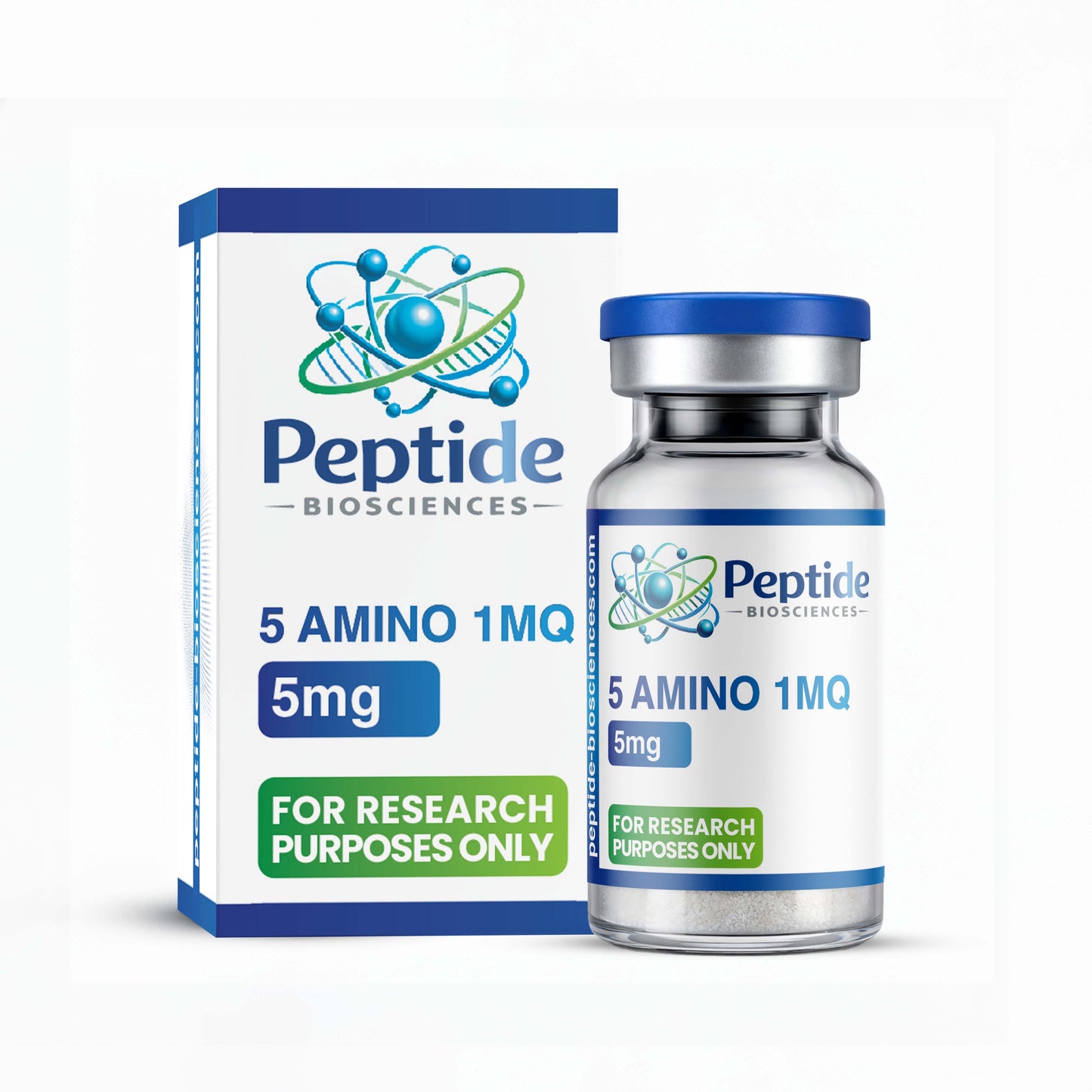


5-Amino-1MQ
5-Amino-1MQ
Multi-buy savings: save 4% on 2+ items and 6% on 3+. Applied automatically in your cart.
Couldn't load pickup availability
- Same-day dispatch on orders before 2pm, Royal Mail Tracked
- Free UK shipping on orders over £100
- Certificate of Analysis with every order · Request CoA
- For in vitro laboratory research use only
Concentration calculator
For laboratory calculation only. Not for human or veterinary use.
5-Amino-1MQ (5-amino-1-methylquinolinium iodide; CAS 42464-96-0) is a selective, cell-permeable inhibitor of nicotinamide N-methyltransferase (NNMT) — an enzyme that methylates nicotinamide (vitamin B3) to produce 1-methylnicotinamide, thereby consuming SAM (S-adenosylmethionine) and depleting methyl group availability for epigenetic and metabolic processes. NNMT is highly expressed in adipose tissue, where its activity correlates with obesity, insulin resistance, and metabolic syndrome.
By inhibiting NNMT, 5-Amino-1MQ increases intracellular NAD⁺ precursor availability, restores methyl group balance, and has been shown in preclinical models to reduce adiposity and improve insulin sensitivity. It is studied as a research tool for NNMT biology, one-carbon metabolism, NAD⁺/NADH homeostasis, and epigenetic methylation dynamics in metabolic disease models.
Specifications
| CAS | 42464-96-0 |
|---|---|
| Formula | C10H11IN2 (iodide salt) |
| MW | 286.1 g/mol |
| Purity | ≥98% HPLC |
| Format | Lyophilised powder |
| Storage | −20 °C, protected from light |
Research areas
- NNMT inhibition
- NAD⁺ metabolism
- One-carbon metabolism
- Epigenetic methylation
- Adipogenesis
- Metabolic disease models
- SAM/SAH ratio
Selected literature
Research Use Only. Supplied strictly for in vitro laboratory research by qualified professionals. Not for human or veterinary administration. Not evaluated by the MHRA or FDA for therapeutic use. Researchers must comply with the Human Medicines Regulations 2012 and all applicable institutional guidelines. Peptide Biosciences accepts no liability for use outside a controlled research context.
Share