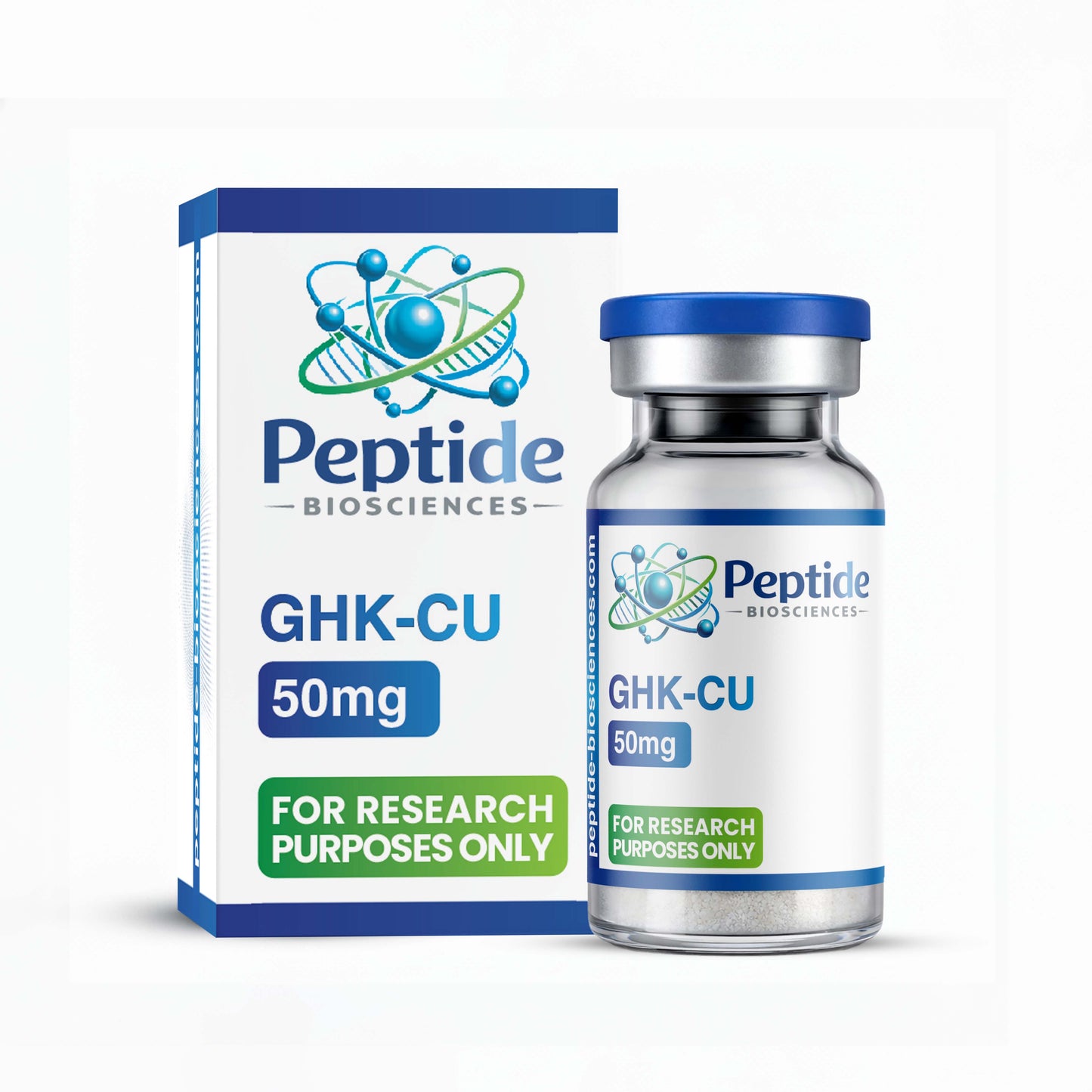


GHK-Cu (Copper Peptide)
GHK-Cu (Copper Peptide)
Multi-buy savings: save 4% on 2+ items and 6% on 3+. Applied automatically in your cart.
Couldn't load pickup availability
- Same-day dispatch on orders before 2pm, Royal Mail Tracked
- Free UK shipping on orders over £100
- Certificate of Analysis with every order · View CoA
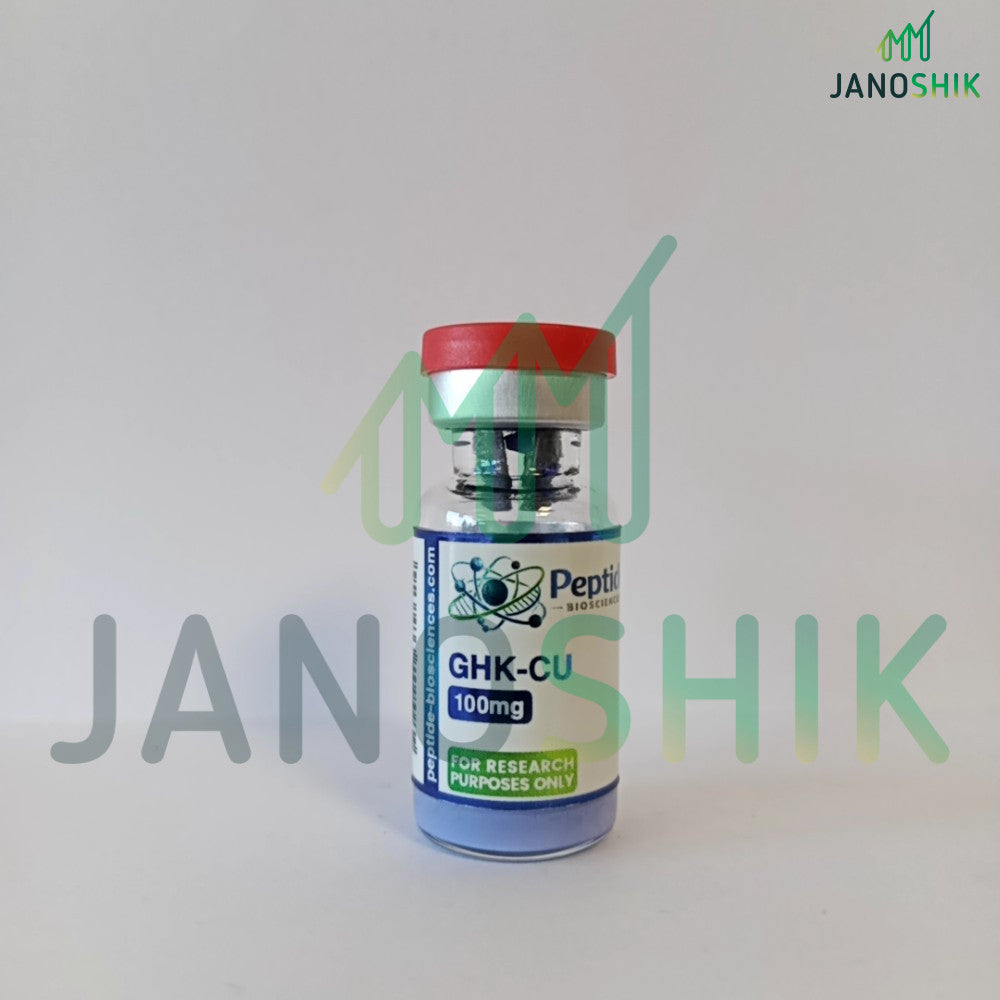
- Independent test: Janoshik Analytical, March 2026 · View report
- For in vitro laboratory research use only
Concentration calculator
For laboratory calculation only. Not for human or veterinary use.
GHK-Cu (Copper Tripeptide-1) (Gly-His-Lys·Cu²⁺; CAS 49557-75-7) is a naturally occurring copper peptide complex found in human plasma, saliva, and urine. Serum concentrations decline from approximately 200 ng/mL at age 20 to 80 ng/mL by age 60, making it a subject of interest in cellular senescence research. GHK-Cu is extensively studied for its role in extracellular matrix remodelling, collagen and glycosaminoglycan synthesis, and copper-dependent enzyme activity.
Gene-expression studies report that GHK-Cu modulates a broad set of extracellular-matrix genes and influences both collagen synthesis and metalloproteinase-regulated collagen turnover in dermal fibroblast models. Its antioxidant activity and effects on inflammatory signalling have been described in in vitro and preclinical studies.
Specifications
| CAS | 49557-75-7 |
|---|---|
| Formula | C14H24CuN6O4 |
| MW | 403.9 g/mol |
| Purity | ≥99% HPLC |
| Format | Lyophilised powder |
| Storage | −20 °C |
Research areas
- Collagen synthesis & ECM remodelling
- Dermal fibroblast models
- Inflammatory signalling
- Hair follicle biology
- Angiogenesis
- Cellular senescence
Selected literature
Research Use Only. Supplied strictly for in vitro laboratory research by qualified professionals. Not for human or veterinary administration. Not evaluated by the MHRA or FDA for therapeutic use. Researchers must comply with the Human Medicines Regulations 2012 and all applicable institutional guidelines. Peptide Biosciences accepts no liability for use outside a controlled research context.
Share